Feast of friends: cannibalism, cinema and social responsibility

Whether it’s a question of greed, survival, insanity or sheer hunger for power, stories about cannibalism give you plenty to chew on.
d8ddf7dd3e33fa26f7925f1b6f72feec

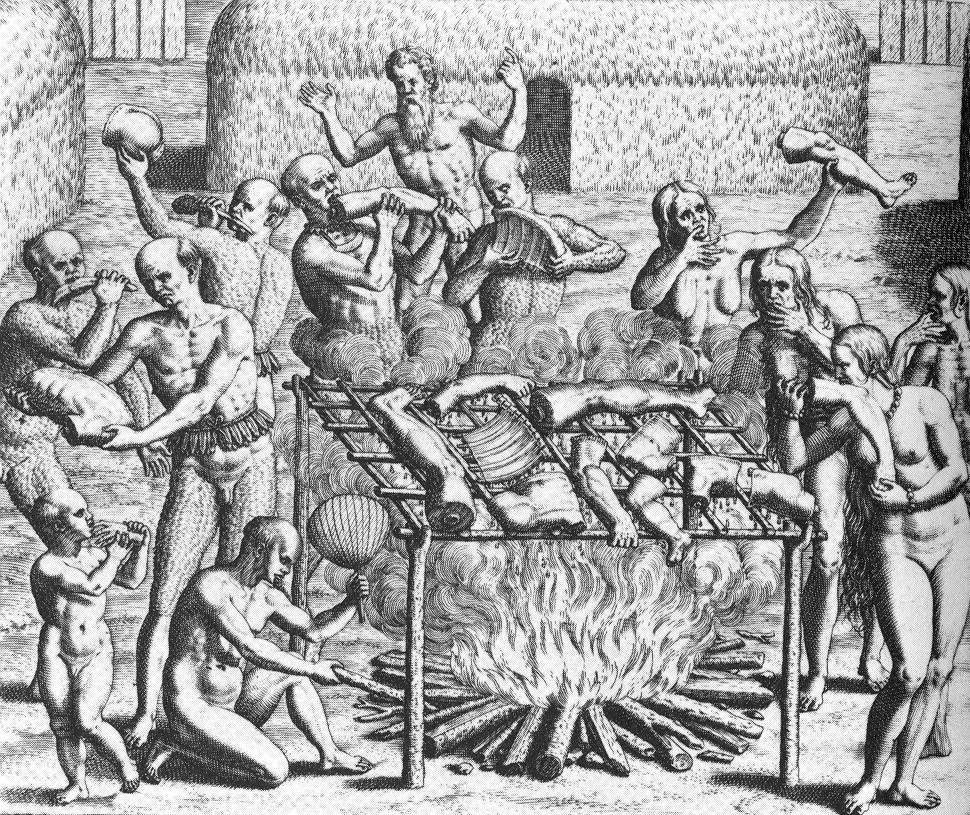
“One calls barbarism whatever he is not accustomed to,” wrote Michel de Montaigne in his famous essay Of Cannibals. Eating another person may be taboo in our civilised world, but as the French philosopher suggested, it’s also a question of context, culture and circumstance.

Filmmakers hungry for shock and provocation have gorged on this moral relativism, and the spicy dramatic potential inherent in seeing people eat other people. Cannibalism offers a rich diet of homicide, depravity, survival ethics and otherworldliness, not to mention the fear that’s haunted everyone since first hearing Little Red Riding Hood as a child. Out there are wolfish predators in human clothing, the story goes, who’ll gobble you up if you’re ever lost in the deep, dark woods.

Hypocritical and half-baked

Take the Amazon rainforest for example, the setting for unashamed gore-fest Cannibal Holocaust. With the insolence of especially cocky gap year students, four amateur filmmakers make a salacious documentary about local tribes, who respond in kind by dismembering and devouring the invasive upstarts in an act of ritualistic slaughter.
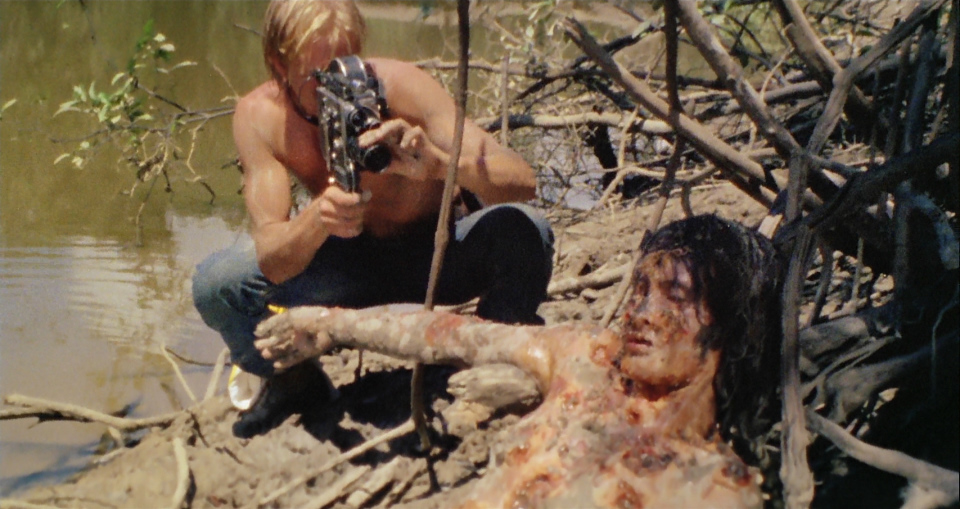
MV5BNGYwODQzN2MtNTg1MC00MGE1LWFiYTgtMDQ5YTkyMDhmMGE4XkEyXkFqcGdeQXVyMTQxNzMzNDI@._V1_
Cannibal Holocaust (1980)

An anthropologist retrieves the footage, setting up a movie-within-a-movie storyline that’s part-horror, part-nature documentary and part-media satire. Unfortunately, with its comic book gore, exploitative casting of real tribes as flesh-feeding maniacs, and juvenile visions of naked ladies writhing in mud while being clubbed to death, Cannibal Holocaust comes across as hypocritical, half-baked and more than a bit rubbish.

On the same continent, at much higher altitude and with infinitely more class, Alive tells the true story of an Argentinian rugby team whose plane crashes in the Andes. At first the survivors feed off each other for emotional support, then literally feed off each other in a bid to stay alive, nibbling on dead passengers to avoid starvation.

The movie makes a clear connection between humans devouring one another for strength, and an oppressive elite harvesting the resources of others

Despite its two-dimensional characters and surprisingly lacklustre emotional punch, Alive shows how cannibalism isn’t the domain of isolated tribes, but something respectable God-fearing folk are more than capable of in the right conditions. And their decision is vindicated too, with human flesh fuelling Ethan Hawke and Josh Hamilton to achieve a superhuman feat of survival.

Conquest and consumption

Superhuman aptly describes Robert Carlyle’s character in Ravenous. A black comedy horror set in California’s Sierra Nevada mountain range in the 1840s, Ravenous channels the myth of the Wendigo, the Algonquin belief that munching on human flesh imbues you with your victim’s power, leaving you invincible, psychotic and addicted to more.
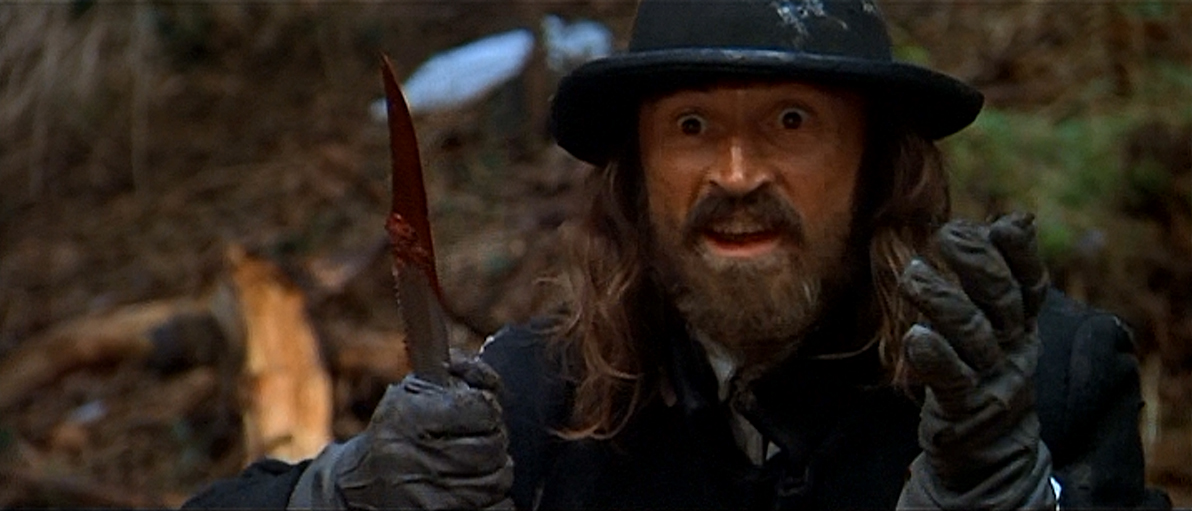
Ravenous
Ravenous (1999)

Blending zombie, vampire and serial killer tropes into a weird Deliverance-style dish, Ravenous is good fun and, in its own way, politically acute. Carlyle and co are frontiersmen obsessed with conquest and consumption, and the movie makes a clear connection between humans devouring one another for strength, and an oppressive elite harvesting the resources of others in the name of prosperity.

Ravenous is about the appetite that builds empires, a greed which makes you stronger at the expense of the exploited, but renders you morally weaker in the long-run. There’s no better modern-day example of this than Dr Hannibal Lecter: the educated, sophisticated, cannibalistic serial killer who chews up the psychologically vulnerable in modern-day Baltimore.

Thomas Harris’s character has brought anthropophagy into the mainstream with wit, panache and amorality, serving up a range of exquisitely sadistic moments, from the closing ‘having a friend for dinner’ line in The Silence of the Lambs to Ray Liotta eating his own brains in Hannibal and Mads Mikkelsen’s sumptuously-depraved lifestyle in the TV show of the same name.
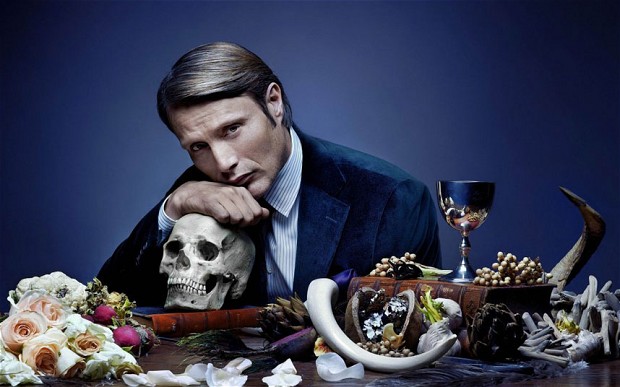
hannibal1_2553735b
Hannibal (2013-15)

The latter is a vision of a world that’s sick, icy and humourless, where inhabitants seem frozen in perpetual disgust and the most virtuous teeter on the brink of insanity. Epitomising the mood is Dr Lecter himself, pure psychopathy to Will Graham’s pure empathy. An affluent narcissist obsessed with personal gratification, he’s the ultimate metropolitan predator, a member of the professional elite hiding his crimes behind a cloak of respectability and refinement.

Moral cholesterol 

Such a bleak power dynamic is flipped gloriously on its head in the charming urban fable Delicatessen. Set in a post-apocalyptic Paris crippled by hyper-austerity, Jean-Pierre Jeunet and Marc Caro’s urban fable tells the tale of an opportunistic butcher and all-round capitalist pig who lures people into his premises at the bottom of an apartment block before slicing, dicing and selling them to hard-up tenants.

The residence has an ecosystem all of its own, an interdependent biosphere where tenants’ lives are interconnected and subject to dietary karma

The feast is spoiled when the butcher’s trembling leaf of a daughter falls in love with an ex-clown, who together team up with a band of subterranean vegetarians to uproot the status quo. Delicatessen creates a deliciously weird tableau of oddball characters, the best one being the apartment block itself. Forever marinated in a sickly green hue, the dilapidated residence has an ecosystem all of its own, an interdependent biosphere where tenants’ lives are interconnected and subject to dietary karma.

A climactic flood washes away all moral cholesterol in the end, cleansing the place of its I’m-all-right-Jacques mentality and restoring a note of much-needed note of harmony. There is such a thing as society, says Delicatessen. And one in which we cannibalise it by living selfishly off each other, whether that be literally or figuratively, is something no sane person should be willing to stomach.

delicatessen-clapet
Delicatessen (1991)

The Links

An Analysis of Michel de Montaigne’s Of Cannibals, The Rugged Pyrrhus, YouTube

Die or Break the Ultimate Taboo, Daily Mail, February 2016

My Crush on Hannibal Lecter, Mashable, October 2018
Opening to Chapter Two of The Bleeding Horizon

In the world’s most sophisticated skyscraper on the island city of Galatea, people are taking blind ambition to a whole new level. As sinister forces human and artificial conspire to drive everyone over the edge, the smartest will be those who learn to look down and deep within. For something truly out-of-this-world is making its way to the top, and everyone’s vision will be getting a little stranger…

The quarantined island of Galatea. Twenty-one years after the Fall.

The black amorphous shape must have arrived by boat, because there was no other sane way to the island. Swelling up from the wine-dark sea, it advanced assuredly through the red haze. This wasn’t the sea creature. That was watching patiently from the waves and hadn’t moved towards land yet.

Night watchman Rex Tuckman removed his Glock 19 pistol from the desk drawer and checked it was loaded. He’d woken from an early evening dream of his father telling him not to sit around waiting to die but to go fishing at the lake. Later he would leave the portacabin, whack golf balls into the void then retire for the night to tell himself another bedtime story about a middle-aged man-about-town and two twentysomething female tourists.

Now he had a visitor. The first for six months, since a hapless PRISM surveying team dressed in yellow and black boiler suits arrived on a trawler to scout the contaminated land for plastic. They wandered like children through the decrepit pleasure pit, mesmerised by the fairground carousel which still rotated and tinkled. We’ll send someone to pick you up, one of the square-jawed simpletons said when leaving. We can still win this war. The system hadn’t spat anything out since. Except two crippled seagulls which Rex stalked with relish before administering the coup de grâce.

A tall man in a long coat was visible through the dirty, cracked window. He had a climber’s rucksack strapped to his back and a grubby white vest tucked into his grey, weathered combats. Locks of dark, curly chainmail hair ran to his shoulders. A gaunt figure, like an emaciated lion, reminiscent of the malnourished prisoners Rex used to marshal into PRISM’s camps. Handsome though. And seeing as he’d made it out this far, clearly crazy. Dry as a bone too. Rex slipped the gun behind him, shoving the barrel into the waistline of his tea-stained canvas trousers. This was love at first sight.

“If you’re here for the wet t-shirt competition, you’re too late.”

“I’ve come to see the tower.”

“Tourist season is over pal,” Rex grunted, pointing to the sign in the window. NO ACCESS PERMITTED TO ANY OUTSIDERS. The stranger’s eyes were drawn to the decal of a dove bearing the legend PEACE ON EARTH. A sardonic joke from the previous security officer, long since retired for what PRISM called ‘the affliction of cognitive dissonance’.

“You’re two decades behind schedule. All paths terminate here. The campers have packed up. The rides are shut. Evening entertainment is just me, shaking my maracas. Awaiting the presence of the sublime.”

Rex curled the fingers on his right hand to meet his thumb and flicked his wrist back and forth, gesturing to the magazine lying open on his desk. Under the headline NOT IN MY MESS, OFFICER, horny housewife Starshina Sessions was spanking a white whale of a man. He wore only a leather jockstrap and a green beret too small for his bald head. A few more pages of this and the rest of the general would go stiff.

The stranger seemed unimpressed by the martial foreplay. Staring through Rex, he scanned the hut, clocking the TV, radio, filing cabinet, camp bed, cooking stove and two crates of low-grade Kalypsol. On the noticeboard was a three-year-old calendar, a map of the island and a poster listing emergency telephone numbers. They’d all been crossed out with a red felt tip pen. Scrawled across the top margin of the poster were the words EVERYTHING IS FUCKED.

“It’s a lonely life here,” said Rex. “But it’s great literature like this which fills the void within.”

The Bleeding Horizon is available to buy at Apple BooksAmazonBarnes & Noble and Google Play.

Rear view mirror: Sexuality, vandalism and Velasquez’s Venus

No matter how intimate you are with another person, do you ever really know the person gazing back at you?  How Diego Velasquez creates fear and desire, longing and loss, anxiety and anticipation, in The Rokeby Venus.

1280px-RokebyVenus

It was a hatchet job like no other. The woman was attacked from behind, the efficient jabbing of a meat cleaver hacking six deep cuts into her exposed, pearlescent flesh. When the butchery had climaxed, the wounds stretched from the nape of the neck, down the smooth elegance of the back and finished at the curvaceous ridge of the left hip.

The victim was Venus, the Roman Goddess of Love. In seconds, the sexual deity was brought savagely to earth, in what must have seemed to onlookers like the senseless violence of a madman. Yet the attack wasn’t senseless, and the culprit wasn’t even a man. On the morning of March 10 1914, suffragette Mary Richardson carved her own notorious signature on the history of art by vandalising the most desirable female of all.

Richardson-Venus

The lady was the Rokeby Venus, Diego Velásquez’s only surviving female nude. The scene of the crime was London’s National Gallery. The previous day, suffragette leader Emmeline Pankhurst had been arrested in Glasgow while escalating her campaign to secure women the vote. In response, her loyal lieutenant marched into the grey, statuesque building overlooking Trafalgar Square and launched a calculated cultural missile against the patriarchal establishment by knifing, in her words, ‘the most beautiful woman in mythological history, as a protest against the Government for destroying Mrs Pankhurst, the most beautiful woman in modern history’.

Remote and depersonalised

In Mary’s eyes, Velásquez’s seventeenth century flesh show visualised all that was wrong with society. Women had been stripped of their innate rights, she believed, in the way Velásquez had artfully deprived Venus of her clothes. Females were subjugated to second class status, mere vessels of servitude existing solely for the gratification of men. The figure of Venus was the ultimate example of this oppression: a fictitious incarnation of masculine desire embodying all that women should be.

1280px-RokebyVenus
The Rokeby Venus by Diego Velásquez (1647-1651)

From a heterosexual male perspective, the 122cm by 177cm oil painting is pretty much perfect, as alluring and intoxicating as rich perfume drifting amorously through the air. Velásquez depicts Venus from the rear, lazily reclining amid an opulent boudoir of white, grey and crimson, absorbed in a looking-glass propped up by her son, Cupid. The visual field drinks in her entire body, from the big toe of the left foot to the right elbow supporting her lovely head. The spectacle is crowned by a bob of soft chestnut hair, just a few deft flicks away from draping seductively across her shoulders, like the pink ribbons which gracefully decorate her vanity mirror.

Venus’s face, that most expressive part of any person’s body, is obscured and muddied in the mirror, rendering her mood beyond scrutiny.

These details are mere supporting players to the main attraction: the exquisitely-defined backside sitting below the dead centre of the picture. A work of art in its own right, Venus’s bottom is a masterpiece of svelte shapeliness, the white, grey and blue pigments blending to create a pale, supple playground of soft, yielding flesh. It’s a visual gratification that soon gives way to mental anticipation, as your mind races ahead to imagine what delights may await when she turns over.

Such provocation is part of the picture’s problem though. Despite its aura of intimacy, the Rokeby Venus feels strangely remote and depersonalised. Venus’s face, that most expressive part of any person’s body, is obscured and muddied in the mirror, rendering her mood beyond scrutiny. She is distant from the viewer, less a real person and more a sexual object. Physicality is foregrounded, personality is traduced, and the picture feels emblematic of a sexism that makes Mary Richardson’s vandalism almost understandable given the political inequalities of her time.

400814
Mary led away by policemen after the attack (Museum of London)

If you were to intellectualise it further, you could say the painting predates and embodies what 20th century French psychoanalyst Jacques Lacan called ‘gaze’: the theory that once people become conscious of themselves as objects, they begin to comprehend themselves through the viewpoint of the watcher, and consequently lose their sense of autonomy.

A gaze manipulated and controlled

In feminist terms, the male gaze strips the opposite sex of its identity, exerting a pernicious power that arguably still persists in the fashion and celebrity magazines of today. Through Velásquez’s placement of the mirror, Venus is in effect watching herself being watched by the heterosexual male for whom the picture was no doubt intended, the epitome of womanhood appreciating her ‘self’ through the prism of a male-oriented aesthetic. But Velásquez is not your ordinary artist, and this isn’t your ordinary slice of upper-class erotica. The more you look at the Rokeby Venus, the more you realise the painter’s mission isn’t to insidiously crush female self-esteem, but something far more ambiguous.

Consider the unorthodox pose in which Venus lies. Many depictions of the Goddess in art – Botticelli’s The Birth of Venus, Giorgone’s Sleeping Venus, Titian’s Venus with a Mirror – are painted from the front. In the Rokeby version, Velásquez reverses the decision, leaving more to the imagination, yet undercutting your sense of voyeuristic authority. With her back turned dismissively and face inscrutable, the scene feels like a highly-charged game of sexual poker – a playful prick-tease in which the aloof, enigmatic Venus holds all the cards. She is a goddess after all, beyond the reach of ordinary men, and the fact we can’t read her emotions only adds to the viewer’s disempowerment.

Giorgione_-_Sleeping_Venus_-_Google_Art_Project_2
Giorgione’s Sleeping Venus (1510)

Moreover, Velásquez’s brushwork reinforces the feeling of our gaze being manipulated and controlled. At the centre, where those glorious buttocks sit resplendent, the technique is pin-sharp, while the face in the mirror – a messy, poorly-defined blur which x-ray tests prove was an intentional artistic effect – remains out of focus. You can only look at one thing at a time, implies Velásquez, and Venus knows exactly which part of her body your eye is being drawn to. The male gaze is essentially hypnotised and subjugated, and although the suffragettes may have disagreed, you do begin to wonder which gender is actually chained to the railings.

Contemporary art historians have found that if you were to recreate the Rokeby Venus exactly with a real-life model, the mirror would in fact reflect not Venus’s face but her crotch.

A closer look reveals another, more significant, optical illusion. The reflection in the mirror, tonally out of sync with the rest of the picture, is a flagrant breach of perspective. In spatial terms, it would be impossible for Venus to be looking at herself in the mirror. If she was, we wouldn’t be able to see her face because her head would be in the way. This is what’s known as the ‘Venus effect’, a piece of visual trickery commonplace in depictions of the Goddess since the Renaissance. By breaking the laws of physics and transposing the face onto the vanity mirror, the picture implies Venus is in fact staring directly at us, and that we, not the Goddess, are the self-conscious objects of the Lacanian gaze.

That’s not the only sleight-of-hand, especially for the dirty-minded. Contemporary art historians have found that if you were to recreate the Rokeby Venus exactly with a real-life model, the mirror would in fact reflect not Venus’s face but her crotch. So maybe the rough, murky expression staring out from that dark mirror-world represents something else entirely, and is coded visual language for that shadowy recess which for many men is the ultimate Venus flytrap. Is there something not to be trusted about that place, we wonder, and are we in fact being warned about the dangers of carnal pleasure? After all, the word Venus derives from ‘venenum’, the Latin word for poison, which would make men nothing more than feeble drones being drawn to their doom, like the sailors who perish before the Sirens in Homer’s Odyssey.

Cupid

Such a reading is woefully sexist though, succumbing to the depressing binary pattern that occurs in so much male art, which sees women as angels or whores, sweet innocents or femme fatales. Another interpretation does suggest itself, one which feels more in tune with the picture’s sheer romantic sensuality. Velásquez painted his Venus in the latter half of his career during a sojourn to Italy, which in those days was a more permissive, easy-going society that the puritanical solemnity of the Spanish Royal court. Biographers argue that, in the throes of a mid-life crisis, Velásquez entered into a steamy affair with an Italian courtesan, and it’s that woman and that fling – ecstatic, bewitching, life-affirming – which he glorified so spectacularly in paint.

A paramour from the past

The artist returned to Spain taking his memento with him, perhaps wondering whether he would ever see the real thing again. In that context, the fading, greyed-out face is more poignant than provocative, symbolising a transitory passion that’s slipping away, the nuances of a lost love’s beautiful face dissolving sadly into Velásquez’s rear view mirror. It’s therefore not a hunger for sexual domination, but a yearning for an untouchable romantic love, the thing of which Venus is the highest spiritual incarnation, that’s the picture’s raison d’être.

diego-velazquez.jpg!Portrait
Self-portrait of Diego Velásquez, Las Meninas (1656)

Maybe, maybe not. Like Velásquez’s most famous picture Las Meninas, the Rokeby Venus will always be a perplexing enigma. Perhaps the safest conclusion to draw is that the painting is one gigantic mirror, propped up not by a compliant Cupid but by the force of our own preoccupations. Like all art, you get from the picture what you bring to it. In the end, it’s up to you whether you think it’s a chauvinistic assault on women, an ode to the eternal struggle of sexual politics, shrewd psychoanalysis before its time, an achingly sad love letter to a paramour from the past or just the finest ass in Western art.

So close you can almost touch her, so faraway as to be unknowable, she’s a quintessential vision of the pleasure and pain inherent in sexual love.

Much like a failed relationship or an imagined fantasy, great art has a habit of leaving you with more questions than answers. To me, conflicting emotions of fear and desire, longing and loss, anxiety and anticipation, are what Velásquez’s picture is really all about. There’s something both attractive and repellent about this fragrant, ineffable goddess, who draws you in with her raw sexuality and pushes you away with her inscrutability. So close you can almost touch her, so faraway as to be unknowable, she’s a quintessential vision of the pleasure and pain inherent in sexual love.

No matter how intimate you are with another person, Velásquez says, do you ever really know the person gazing back at you? And how much power can you hope to have, when you’re in the throes of an emotion that’s based on naked surrender and blind, ecstatic loss of control? Absorbing the Rokeby Venus is like taking a magisterial step into the art of the unknown, an image that beckons you seductively across its threshold to meet Love itself, the single greatest experience life has to offer, and leaves you wondering what on heaven and earth you’re letting yourself in for.

galeria-nacional
The Rokeby Venus in situ at London’s National Gallery

The Links

The Toilet of Venus, National Gallery website

The painting that shocked a suffragette BBC Magazine Monitor, 10 March 2014

Sex, slashing and suffrage Trebuchet, 19 September 2015 

Remote worker: economy and empathy in Herman Melville’s Bartleby The Scrivener

Words are a serious business, but sometimes only tell half the tale. Phil Parrish explains why a 19th century American short story has a few things to say about employee engagement.

This article was written on behalf of 44communications.co.uk, one of the UK’s leading creative internal communication agencies.

“I’d prefer not to.” Four simple words which seem so commonplace, but when coming repeatedly from the mouth of a disengaged employee, or the pen of a master storyteller, can soon turn haunting.

The workshy colleague is Bartleby the Scrivener, a copier of legal documents in a 19th century Wall Street law firm and one of the most demotivated workers in the history of American literature. The tale’s unreliable narrator is Bartleby’s unnamed and self-absorbed boss. And their creator is Herman Melville, best known for his epic novel of seamanship and obsession, Moby Dick.

Despite the vast difference in length (Bartleby The Scrivener has a mere 14,355 words while Moby Dick busts the 200,000 mark) there are dark parallels between the two stories, with both lead characters seized by a weird mental paralysis that chokes their ability to connect with people.

The unhinged Captain Ahab cannot get past his demented pursuit of the whale – “From hell’s heart I stab at thee” – while the timid, preternaturally reserved Bartleby is unable to utter anything other than “I’d prefer not to”; a career-damaging cop-out he repeats to his boss whenever he has the temerity to give him something to do.

Tantalising puzzle

At first the scenario is comic, as we watch your typical office power dynamic unravel through the perspective of Bartleby’s increasingly perplexed, yet maddeningly obtuse, line manager. Some would say the supervisor brings it on himself, positioning his employee from day one in front of an office window where the sole view is grim, claustrophobic yet metaphorically apt brickwork.

The story ends on an image of confinement too, as workplace deadlock turns to complete mental deterioration. Passive, uncommunicative and wasting away, Bartleby is imprisoned in a New York jail, where he eventually crawls into the foetal position in the courtyard to let death draw in. The narrator remains mystified, unable to explain the behaviour of his charge. And Bartleby, of course, prefers not to either.

Neither does Melville for that matter. Apart from alluding to Bartleby’s previous job as an administrator of letters meant for people who have since passed away – an experience which may or may not have triggered his downward spiral – the author leaves the story open-ended, a tantalising puzzle inviting myriad interpretation.

Economy of words

Is it a lament on some people’s inability to truly express their feelings? Or maybe it’s an insightful, prescient look at mental illness in the workplace, and a reminder that we all bring our own personal baggage to the office.

Perhaps it could be a satirical jab at greedy businessman so obsessed with profit they forget their duty of care. Or finally, a stinging critique of a selfish society that can’t protect its most vulnerable, that ultimate yardstick of how civilised we are as people.

Maybe it’s all of these things. As someone who writes for a living, what I love most about Bartleby The Scrivener is the way such depth of feeling and mystery is created from such economy of words.

Melville’s work can be read in under an hour, but it still packs a titanic punch, epitomised by those four simple words repeated again and again, the fulcrum on which the story leverages its strange, unsettling power.

Beneath the surface

Bartleby the Scrivener teaches us to heed language closely, to listen to the quiet and understated voice in the corner, to feel the undercurrents stirring within the most minimal of phrases, and to recognise that for all their power, words, speech and stories never quite manage to tell the whole truth.

In the final analysis, Melville’s cri de cœur is one of empathy: the ability to look beneath the surface of what’s being said (or not said), imagine yourself into another’s perspective and understand that the most powerful human need – to connect with others – can be expressed in very different ways.

As Bartleby’s boss sadly demonstrates, ignoring such cries is dangerous. Chances are we’ll misread the situation, make the wrong call, do more harm more than good and end up making genuine communication a virtual impossibility, stranding us in a no man’s land of dysfunction and distrust.  

And we’ll all prefer not to do that. Wouldn’t we?

The Links

Bartleby The Scrivener, Good Reads

Herman Melville at Home, Jill Lepore, The New Yorker, 22 July 2019

Herman Melville’s Bartleby and the steely strength of mild rebellion, Stuart Kelly, The Guardian, 9 January 2017

Extract from the prelude to Part Three of Game of Life

On a snowbound Easter Sunday, the Porlocks gather for the final time in their soon-to-be demolished family home. All Porlocks that is, except one. As time and nature close in, the family embarks on a journey of remembrance from ancient Egypt to Victorian England and into its own troubled past, awakening long-repressed voices which refuse to be silenced.

An entry in the private diary of Elise Porlock, Monday 21 March 2005

I went to him again last night and we mixed our blood together. He’s like a second dad. When I was little, I remember how huge Dad number one seemed. A giant stomping around, like those big and small dreams you have when you’re ill. That’s how my Prince seems now, like he’s from another land full of giants.

We used razor blades, just to make little cuts. Then we held our wounds together and looked into each other’s eyes. It was so sweet, so spiritual. We had to be careful, because you know I bleed quicker than most. I felt his hunger then, like I imagine I will when he’s inside me. And you know how that feels, don’t you Lucy? Different from when we used to experiment on each other, I bet. BLUSH.

Between us girls – he’s got SERIOUS game. DOUBLE BLUSH. Did I tell you he was a games designer? He creates the setting, rules, story, props, vehicles, character interface and modes of play. He says he loves the idea of creating characters and then giving them to other people to control. Says his last girlfriend cast a spell on him which only I can break. Corny I know, but I liked it. You could tell he really meant it.

OMG, I’ve not told you about his tattoos, have I? They’re all over his back and arms, like a weird tangled mess of trees. I love the pale white skin underneath, as if there’s an angel trapped behind it all waiting to be freed. You could spend ages looking at the ink and not working out what it means. Hidden depths, you know. Sometimes I feel they’re a front and don’t really say what’s inside. More like a barbed wire fence that warns you to keep out. Dracula’s castle. The House of the Undead. My Prince of Darkness.

Next thing you know I’ll be going through some kind of weird Goth phase wearing dark eyeliner, sleeping all day and listening to angry bedwetting tunes to piss off mum and dad. Christ, something’s got to get them going. If they do fight, they do it all behind closed doors. At least with my prince, I know he’s taken off his mask.

You know what we talked about the other night though? Death. I said the first time I realised everyone died was at the British Museum where I saw a mummy in its tomb. I remember crying. All I wanted to do was go up and down in the lifts all day. Then there was that one summer when the bird got stuck in our chimney. It fluttered and beat its wings for days, getting slower and quieter. Then it stopped. I knew what had happened and that made me cry too.

It sounds crazy but I feel like I’m in The Tiger Who Came to Tea. This powerful creature coming into my life and taking everything. You want them back, but they never come. But he does come eventually, ha ha. Anyway, Luce, the blood is where it begins and the blood is where it all ends, I reckon. Blood is life, love, friendship and bonding. Something sacred. When you swap it, there’s no going back.

Game of Life is available to buy now as an e-book or in paperback. Discover more at:

The House Party From Hell: Pasolini, Fascism and the excesses of Salò

When does indignation become resignation?  Pier Paolo Pasolini’s Salò: 120 Days of Sodom bludgeons you with such gratuity that you don’t feel anything but helpless

salo_7_pas_2
Pier Paolo Pasolini (1922-1975)

“All things are good when taken to excess,” concludes the creepy, officious bishop when signing off a masterplan proposing the capture and torture of eighteen innocent teenagers. Sharing the table in his shadowy lair are three sinister co-signatories, a duke, a magistrate and a president. Together the quartet govern the Republic of Salò, the last bastion of Italian Fascism in the final days of the Second World War. They have decided to enjoy some seriously depraved fun, kicking things off by marrying each other’s daughters.

This is the dark prelude to Pier Paolo Pasolini’s 1975 film Salò: 120 Days of Sodom, a viciously pessimistic look at how sexual perversion is the ultimate expression of power. The opening scene is a cold and economical one, an apt overture to the repulsive events that follow. For Salo is a Marxist intellectual’s vision of evil as a sociological force, inflicted with calculating, sadistic extreme on an oppressed minority.

The plot is based on the book by notorious 18th century French libertine the Marquis de Sade and structured around the four parts of Dante’s Inferno: the Anteinferno, the Circle of Manias, the Circle of Shit and the Circle of Blood. The four debauched caricatures (‘characters’ would be far too kind) begin their spiral into hell by rounding up nine young men and nine young women with the clinical efficiency of concentration camp capos, before subjugating them to an impeccably regimented ordeal of defilement in a plush Italian villa.

Process and form 

Over the course of two long cinematic hours, the youngsters are degraded, sodomised, forced to bathe in and eat shit, then tortured to death. If this sounds gratuitous, that’s because it is. And it’s why some critics have dismissed Pasolini’s last film as a perverted work of gay pornography and not the sincere, artful and only partially successful polemic it actually is.

A staunch Communist, Pasolini deplored how authentic Italian culture was being destroyed by what he saw as a pernicious mass consumerism.

Admittedly Salò does have the stylistic hallmarks of a flesh show: the single locale, the group of attractive people, the one-dimensional plot, the elaborate sexual configurations. Yet eroticism is the last thing on your mind: the solitary moment of sexual tenderness is mercilessly ended by gunshot. Rarely does Pasolini indulge in sensual close-ups either, preferring wide panoramas, formally-composed tableaux and a cold, clinical tone that borders on the surgical.

salo-was-the-film-that-truly-shocked-me-789-1418149755
Salo: 120 Days of Sodom (1975)

Process and form are everything in Salò. Precious little is done to explain the motivation of the torturers, save for the fact that they are men in power, and this is what men in power will do. Equally inscrutable are the victims themselves, who rarely emote or speak, reduced to homogenous lumps of malleable flesh meekly submitting to their appalling fate.

A lament for a lost generation

A staunch Communist, Pasolini deplored how authentic Italian culture was being destroyed by what he saw as a pernicious mass consumerism. This new kind of Fascism was degrading spirituality and individuality, he believed, a sickness symbolised in Salò by the young captives wallowing in and re-digesting their own filth. More than a critique of Mussolini’s dictatorship, Salò is a lament for this lost generation too, and a depiction of how humanity is consuming itself through perverse appetites.

The same criticism can be levelled at the movie too. Salò is so overpowered by the malignant authority at its heart that it begins to feel like the work of the very Fascists it sets out to condemn. Resignation and acceptance are the film’s signature tones. Pasolini bludgeons you with such gratuity that by the end you don’t feel anything but helplessness: a numb spectator witnessing the end of civilisation itself.

Rumours (and eyewitness accounts) persist that (Pasolini’s death) was meted out by a group of thugs dispatched by those dark authority figures who’d once denounced him as a ‘corrupting homosexual’

No sense of resistance or counter-argument is offered, an odd stance for such a fiercely political filmmaker. I’d swap all of Salò for that one quiet scene in Pasolini’s 1964 masterpiece The Gospel According to Matthew, where a sleeping King Herod writhes with nightmares of guilt, a haunting depiction of what power can do to people. There was resilience and belief in that film. But that was in Pasolini’s younger days, when he was more idealistic, more hopeful and less disillusioned.

The moment of death

A few weeks before Salò’s release, the director’s corpse was found in the Italian coastal town of Ostia. The official (long-disputed) verdict is that he’d made sexual advances to a young man who, supposedly out of self-defense, ran over Pasolini several times with the director’s own Alfa Romeo. Autopsy pictures tell a different story though: one of prolonged, deliberate sadism.

Rumours (and eyewitness accounts) persist that it was meted out by a group of thugs dispatched by those dark authority figures who’d once denounced Pasolini as a ‘corrupting homosexual’. Perhaps they even planned it with the same unnatural malice as the four libertines at the start of Salò, a scene which feels more like an ending than a beginning.

“It is only at our moment of death that our life, to that point undecipherable, ambiguous, suspended, acquires a meaning,” Pasolini once said. Far from being his best film, Salò is still a profoundly unsettling one, serving as a sad yet strangely appropriate epitaph for a great filmmaker tragically engulfed by the relentless brutality around him.

The Links

An Introduction to Pier Paolo Pasolini Chris Fennell, BFI, 27 February 2017

The Film That Truly Shocked Me Joe Bish, Vice 9, December 2014

Who really killed Pier Paolo Pasolini? Ed Vulliamy, The Guardian, 24 August 2014

Extract from Chapter Thirteen of Game of Life

On a snowbound Easter Sunday, the Porlocks gather for the final time in their soon-to-be demolished family home. All Porlocks that is, except one. As time and nature close in, the family embarks on a journey of remembrance from ancient Egypt to Victorian England and into its own troubled past, awakening long-repressed voices which refuse to be silenced.

The cigarette smoke formed a light, languid circle in the frigid evening air. Michael learned the technique in his delinquent years, loitering in the alleyway with Tom, Dave and Lennon a few minutes shy of late registration. There was a knack to it. The incremental adjustment back and forth of the tongue, cheek and jaw until, after many attempts, you got it right.

The skill was still gratifying twenty years later. The soothing inhalation, the smoke rising back through the lungs and throat, then sculpted with muscular precision and jettisoned into the air to soar and dissolve. The closest he would get to labour, and not nearly as chafing. Lads’ humour, in the summer of Euro 96, Fantasy Football and hot weather. With hot girls wearing less and less. I wonder what it’s like underneath.

He’d stepped outside just before nine o’clock, his head swooning from two too many glasses of Nepenthe, the sticky aroma of oriental food still pungent in the air. The snowfall had stopped. The bracing wind swept through him, coming from across the river and the chasm created by Clearwater. Power was restored. The kitchen light threw an angular, crosshatched yellow shape onto the dark white lawn.

He always loved cold weather. How the girls wrapped up all warm, leaving more to the imagination than in the clement seasons. How many more layers before you get to the good stuff? Cold sharpened you, knocked you into shape. He hated presenting in stuffy business suites, and once considered a contractual clause to insist on room temperature being thirteen degrees or lower.

If you were skilful and quick enough with your finger, you could depress the top part of a smoke ring to form a love heart, if only for an instant. Maddie asked him to quit smoking many times. You don’t know how much it’s destroying you. She was right, of course, but so wrong. Smoking was the stuff of life. Of inspiration, the rich smell of experience, a tranquilising moment of post-coital calm. A chance to meet beautiful new life outside pubs in shelters as it huddled from the freeze. What’s it like underneath?

Today, his family had inhaled the toxicity of grief, lost themselves in its exhalation, then dissolved into discreet parts of the house. Diffuse, that’s what they’d become. A word that sounded exactly like the sensation it described, urging you to drag the final syllable onwards until it ran out of song. For a brief moment, the family felt whole, at one in the dark. Then they turned profluent, rushing forward on idiosyncratic drives that broke them apart so they could merge with something else.

An old story from an old time. He wanted to tell a new one, without any masks. Michael flicked his cigarette out into the dark and imagined he heard the embers fizzle out in the snow. Come back. Comeback. He turned towards the kitchen door and went back inside, heading upwards to the place where it all began.

Game of Life is available to buy now as an e-book or in paperback. Discover more at:

Art of darkness: Satan, stardom and self-deception

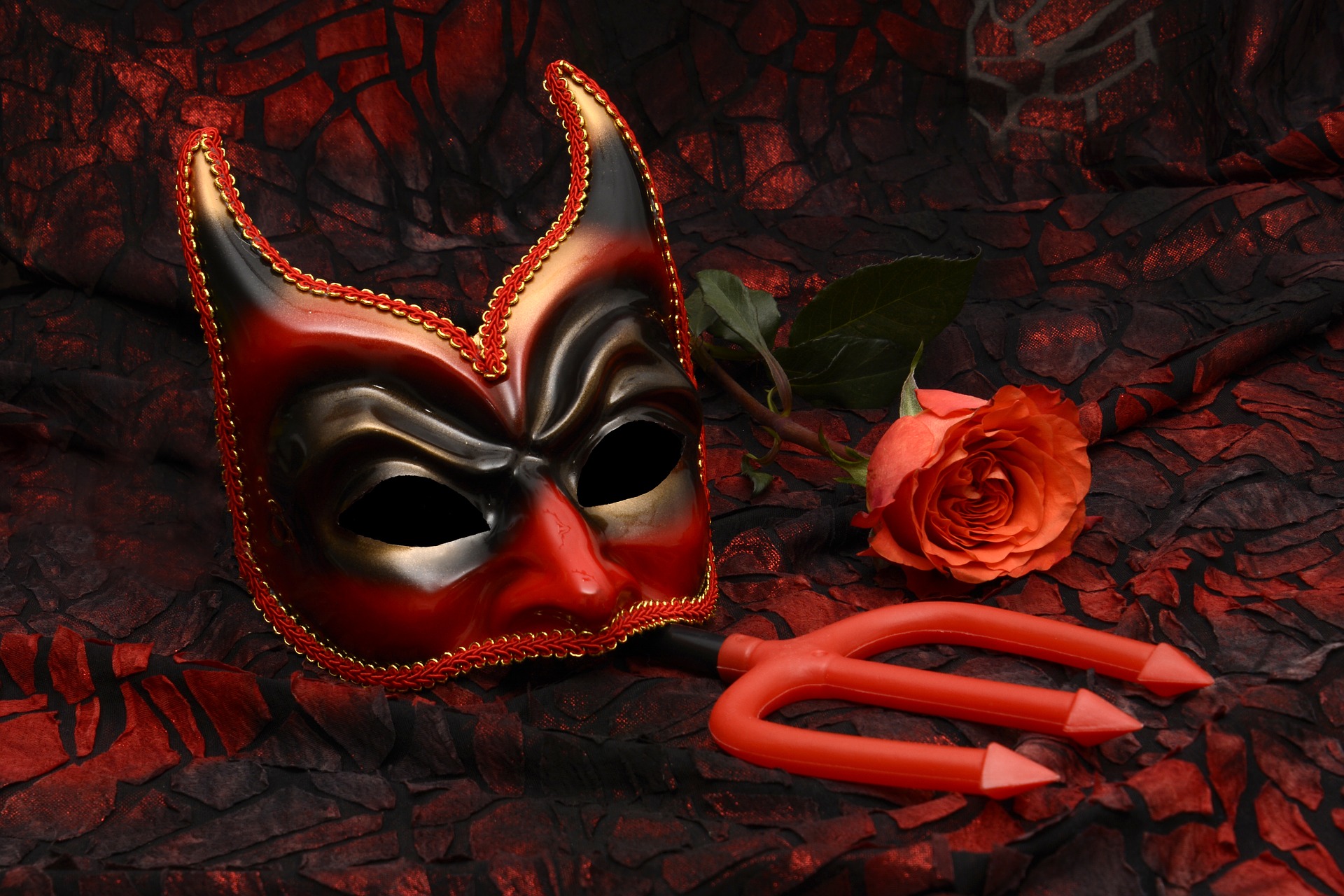
The Devil is a popular character in cinema, but he’s much happier when someone else enjoys the limelight for his evil deeds.

mask-2014554_1920

“The biggest trick the devil ever pulled was convincing the world he didn’t exist,” says Kevin Spacey’s Verbal Kint, the outwardly meek, socially awkward gopher in Bryan Singer’s classic thriller The Usual Suspects. It’s a memorable line that sums up what’s so ingenious about the film’s labyrinthine plot, and why Satan (manifested in criminal mastermind Keyser Soze) is such a compelling character for storytellers.

As Kint implies and the movie demonstrates, true evil is exceptionally good at shaping complex narratives which cover its own tracks. Behind all of humanity’s diabolical acts, the theory goes, is a malevolent creative genius, coolly orchestrating all the action like the world’s most heinous movie-maker, and an artist savvy enough to let someone else take credit for the chaos.

maxresdefault
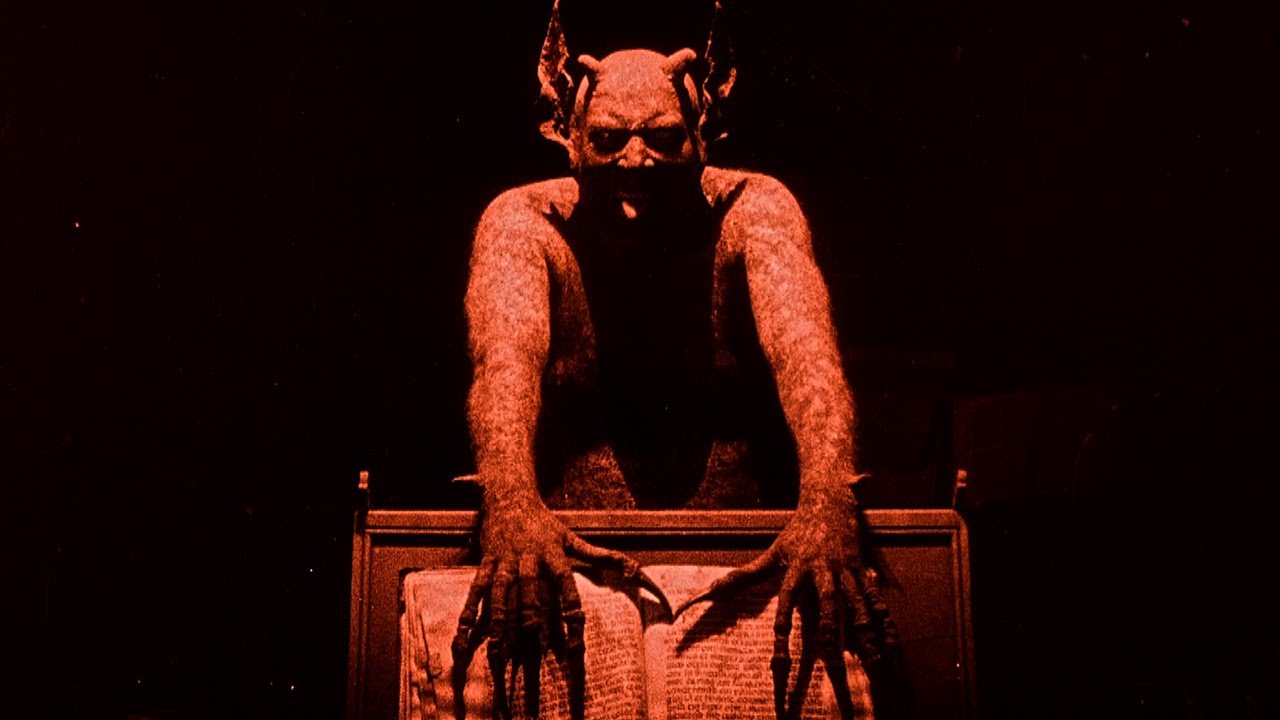
Haxan: Witchcraft Through the Ages (1922)

Conjuring a smokescreen 

The devil as director is a theme playfully explored in Haxan: Witchcraft through the Ages, a 1922 silent Danish horror movie masquerading as sober documentary. With no characters to identify with, and not much in the way of meaningful academic analysis, Haxan deploys the mock-framework of rational inquiry as an excuse to enjoy lurid historical events and weird, fantastical vignettes with the detached thrill of a voyeur.

A gripping, darkly comic tale about the nature of possession, Rosemary’s Baby shows how people unwittingly become docile vessels for nurturing evil.

Masterminding the spectacle is director Benjamin Christensen, who appears himself as Satan, a sexual predator who ogles women through their bedroom windows and makes off with them during the night, a rather sexist metaphor for female flightiness. Women are passive creatures easily possessed, and their predilection to temptation and hysteria is the reason why so many throughout history have been tried and executed as witches.

rosemarys-baby
Rosemary’s Baby (1968)

Female neurosis is the smokescreen concocted by the satanists in Rosemary’s Baby too, Roman Polanski’s 1968 masterpiece about a young woman’s home, marriage and body being invaded by the Prince of Darkness. Mia Farrow and John Cassavetes play Rosemary and Guy Woodhouse, a young New York couple under the control of some exceptionally nosy neighbours, who ingratiate themselves with busybody kindness, isolate the lonely Rosemary from her support network and then serve as masters of ceremony during her middle-of-the-night rape by the Devil.

Narcissistic ambition 

A gripping, darkly comic tale about the nature of possession, Rosemary’s Baby shows how people unwittingly become docile vessels for nurturing evil. Paranoia and conspiracy hang heavy in the apartment block, as Polanski masterfully combines the mundane, the macabre and the natural anxiety of pregnancy. Chief culprit isn’t the Satanists though, or their sinister, patronising advice that all will be well if Rosemary just takes some pills and rests, but the wimpy and easily-seduced Guy, whose narcissistic ambition to make it big as an actor is the Faustian bargain which invites Lucifer into his wife’s bosom.

Gruesome murders, steamy sex, saxophone solos and animal sacrifice all ensue, as Angel chases his own shadow from Harlem to New Orleans

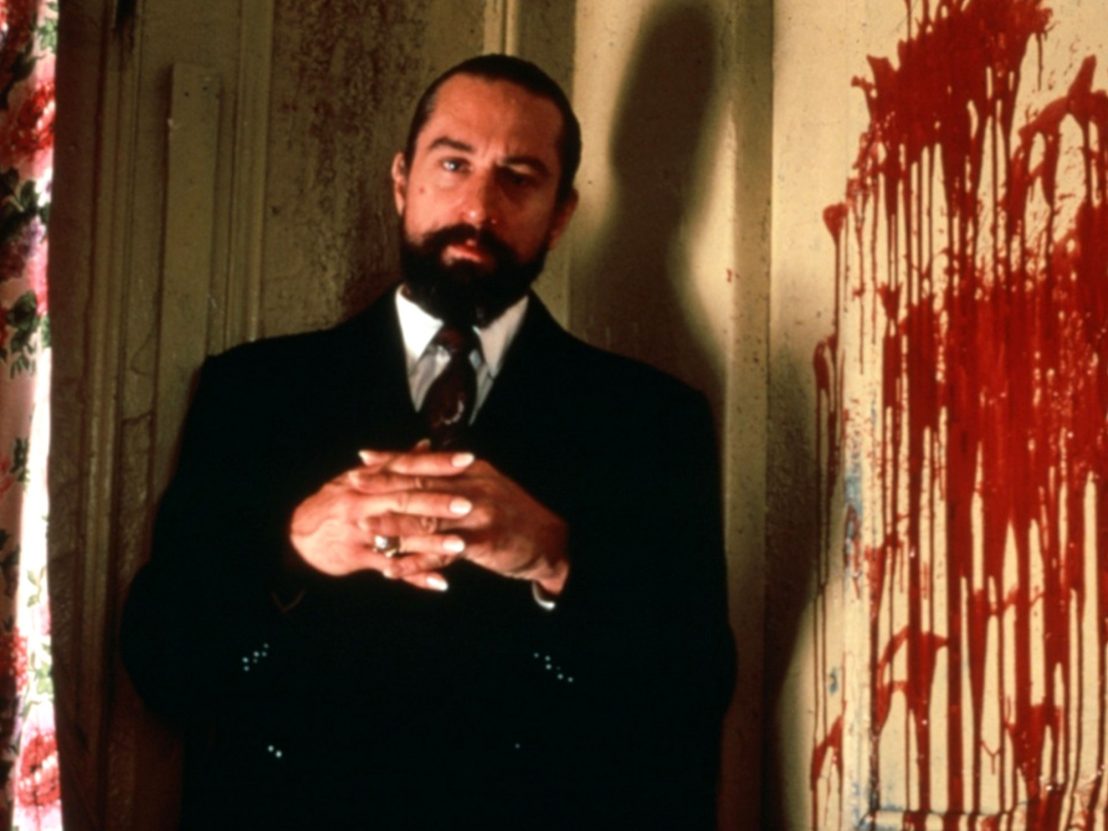
Another entertainer with dreams of showbiz is crooner Jonny Favourite, the missing person at the centre of Alan Parker’s 1987 neo-noir horror film Angel Heart. On his trail is the mysterious, impeccably manicured Louis Cyphre (Robert DeNiro), who hires clammy private investigator Harold Angel (Mickey Rourke) to track Favourite down. Gruesome murders, steamy sex, saxophone solos and animal sacrifice all ensue, as Angel chases his own shadow from Harlem to New Orleans, oblivious to his participation in a vengeful, satanic killing spree.

angel-heart-robert-de-niro-1108x0-c-default
Angel Heart (1987)

A moody, Chandleresque take on the Faustian legend, Angel Heart is let down by a plodding narrative, but is still worth seeing for DeNiro’s brilliant cameo. Quietly terrifying and with an air of chilling stillness, Louis Cyphre (get it?) is gravitas incarnate. It may be a two-dimensional role, but it’s one of DeNiro’s nastiest turns – and a reminder of what a sensational screen presence he was before he sacrificed his reputation for dialled-in roles and fat paychecks, a somewhat ironic postscript to a movie all about selling your soul.

Inner demons

There’s no greater example of this than actor Hendrik Hoefgen, the central protagonist in 1981 German-Hungarian film Mephisto, a riveting look at how performance, power and politics can be an intoxicating combination. Set in 1930s Germany during the rise of the Nazis, István Szabó’s movie sees Hendrik (played by Klaus Maria Brandauer) earn a gilded reputation by playing Satan on stage, then feebly compromise his artistic and political values in return for wealth, social status and the chance to remain centre stage, even if it’s under the grim, controlling searchlight of the Third Reich.

Satan really does exist, flourishing if there’s a cause deluded enough to hide behind

Full-blooded, intensely physical and simultaneously pathetic and tragic, Brandauer delivers one of the most astonishing screen performances by any actor: a masterclass in how to portray manic, tortured energy forever on the cusp of insanity. Satan himself may only appear as a fictionalised character with a red and black costume and a painted white face, but his presence throughout the film is palpable: in the fascists’ moronic, jack-booted urge to dominate, and to a greater degree in the way Hoefgen shamefully justifies his own cowardly actions.

MV5BMjcwMDNlYWUtYzYzMi00NDJjLTlkZTUtNzFjZTNiZWZiOTY2XkEyXkFqcGdeQXVyMjUyNDk2ODc@._V1_
Mephisto (1980)

As Verbal Kint suggests, Satan really does exist, flourishing if there’s a cause deluded enough to hide behind – and if ordinary people allow themselves to be possessed by their inner demons of ego, insecurity and self-deception. ‘The devil is everywhere and takes all shapes’ says the narration at one point in Haxan, and as Mephisto shows, he’s much closer to home than you realise.

The Links

Haxan: Witchcraft Through the Ages Trailer, 1922

‘Can we come in?’ Excerpt from Rosemary’s Baby, 1968

‘Would you like an egg? Excerpt from Angel Heart, 1987

Spellbound: Power, parenting and the perils of the Magic Kingdom

When stories are shared with impressionable audiences, where does responsibility begin and end?

disney-land-2584304_1920

The fresh-faced young maiden is easily disarmed. Still, the juicy red apple does look very enticing. And the face behind it, creaking with old age, exudes warmth and wisdom.

Little wonder the angelic brunette accepts the gift. She’s been through hell, and has clearly missed the parental lecture about never trusting strangers. Naivety proves an unforgiving mistress though. For the fruit Snow White takes from the old women is laced with poison, and she is trapped in a coma from which she’s not supposed to wake.

Did the world of children’s entertainment fall under a similarly insidious spell back in 1937, when Snow White and the Seven Dwarfs became a box office smash? In the 77 years since Disney’s first animated feature, the brand has become an insatiable cultural phenomenon. Yet to many it is cinema’s wicked stepmother, a power-hungry, money-making ogre anaesthetising innocent children with its ersatz blend of superficial magic and questionable values.

The contaminated apple?

The case for the prosecution is that Disney has limited children’s imaginations, garnered a formidable track record for stereotyping races and genders, promoted sexualised, passive and impossibly perfect images of females, portrayed marriage as the ultimate end-game in happiness, and followed through on its corrupting agenda with an aggressively sophisticated one-two of make-believe theme parks and merchandise. Truly, it is the contaminated apple which every innocent yearns to bite.

To many this over-simplified view of good and evil is part of the problem: we all know the world doesn’t really work like that. Yet what fairy tale doesn’t polarise its heroes from its villains?

As father to a four-year-old girl, I used to wrestle with the Disney dilemma whenever the iconic castle sparkled onto my TV screen. Was her tender mind being subtly brainwashed into believing in a non-existent world of happily ever afters? A place where heroines can only find truly completeness by landing a man? Where such characters are always hourglass beautiful? And where there’s a Fairy Godmother who’ll magically dissolve your troubles when times are hard?

After much deliberation, I’ve decided such worries are misplaced, more projections of natural parental anxiety than any sinister plot by The Walt Disney Company to repress half the world’s population. Truth be told, the Magic Kingdom is simply doing what grown-ups have done for centuries, taking aeons-old fairy tales and revitalising them for the audiences and appetites of the day.

pexels-photo-256546

Concentration of power

To many this over-simplified view of good and evil is part of the problem: we all know the world doesn’t really work like that. Yet what fairy tale doesn’t polarise its heroes from its villains, aware of how young minds aren’t ready to chew over too much moral ambiguity? Narratives like Snow White and Sleeping Beauty are allegories more than anything else, bildungsroman alerting children to the world’s viciousness and reminding them they don’t have to succumb to vanity or temptation.

Like many global success stories, Disney is just shrewdly following the logic of modern capitalism which inevitably concentrates power in the hands of those who have the knack of giving consumers what they want.

Such a traditional approach doesn’t make them old-fashioned either. Indeed, you could argue such tales slyly subvert conservative values. If stable families are the source of all wellbeing, it’s truly miraculous children of broken homes like Cinderella and Tangled’s Rapunzel are so well-adjusted.

Equally, to take Disney to task for cultural imperialism is to attack the symptom rather than the cause. Like many global success stories, Disney is just shrewdly following the logic of modern capitalism which inevitably concentrates power in the hands of those who have the knack of giving consumers what they want.

And to its credit, Disney has done that for decades. When I revel in the brilliance and wit of Toy Story 3, I’m reminded how and why I came to love movies in the first place. The Magic Kingdom proved a gateway that’s taken me from Spielberg to Hitchcock to Lang. And what sane film fan would deny their daughter that?

Managed not misunderstood

As parents our job is not to let films educate our children, but to educate our children about films. When you look past the abundant opportunities for subtext in any Disney film (and any fairy tale for that matter), their central message is usually the same. Through loyalty and friendship, you can overcome adversity, take personal responsibility and use it for the collective good.

To denounce the brand is to make it a forbidden fruit, give it more power than it actually deserves and ultimately to forget that the art of parenting is one of moderation rather than control

Besides, things have come a long way since the poisoned apple. Disney’s latest snow queen is Elsa, the socially-withdrawn anti-heroine of Frozen. An independent woman in a land of ineffectual, judgmental men, she learns how to turn her curse into a blessing, taking part in the world rather than running away from it. True to herself (and happily unmarried), she ends the film with a greater sense of duty towards her citizens.

Disney has a similar duty towards its customers, just like parents have a duty towards their children. The lesson of Walt’s world is that magic powers must be managed, not misused or misunderstood. To denounce the brand is to make it a forbidden fruit, to give it more power than it actually deserves and ultimately to forget that the art of parenting is one of moderation rather than control.

So when my daughter twirls across the lounge in full-blown Elsa-mode – confident, empowered, expressing herself, happy in the moment – I remember that good cinema is good cinema no matter who made it. And that as a Dad, sometimes the wisest thing you can do is just Let It Go.

The Links

What can modern girls learn from Disney princesses? Cherry Wilson, BBC News, 22 July 2017

The controversy behind Disney’s groundbreaking new princess Tom Brook, BBC Culture, 28 November 2016

Why Disney princesses and ‘princess culture’ are bad for girls Rebecca Hains, The Washington Post, 24 June 2016

The Irresistible Psychology of Fairy Tales Ellen Handler Spitz, The New Republic, 28 December 2015

Extract from Chapter Six of Game of Life

On a snowbound Easter Sunday, the Porlocks gather for the final time in their soon-to-be demolished family home. All Porlocks that is, except one. As time and nature close in, the family embarks on a journey of remembrance from ancient Egypt to Victorian England and into its own troubled past, awakening long-repressed voices which refuse to be silenced.

Life is about ebb and flow, Roger darling. A boat trip off the coast. Her son sunburnt and seasick from too much vanilla fudge. The rising and falling of his guts in sync with the dipping and drifting of the boat. The ancient summer evening light illuminating her face in a sepia glow. You think you’re moving forward and then, one day, you’re swept back. Then things change and you’re moving forward again. Learn to move with the current and, whatever you do, just make sure you stay afloat.

Mother always knew best, didn’t she? And that’s all Roger had tried to do, wasn’t it? Keep his family afloat. Oftentimes her evanescent voice would whisper back to him, leaving its corpse in the corner of a countryside churchyard where he’d said his last goodbye, rising up to the infinite clouds to comfort him as he hovered this way and that over the lonesome ocean.

You’re always going off course in a plane, he explained to his children on a beach in the Costa del Sol as they watched a Boeing 747 fly out over the sea. My job as a pilot is to bring it back and forth onto our flight path. The straight and narrow as it were. You keep bringing it back and bringing it back. Before you know it, you’re home.

Even in his dreams his mother would come, his worried forehead buried in her lap, absorbing the warmth of her blood and flesh through the lace of her nightdress as they both floated to sleep. One day you’re swept back. Maybe that’s what this was. This box. This video. This final icy ripple which would wash over them all, leaving a placid surface across which they could finally swim to shore.

Roger hadn’t touched the box since he handed it to Elisabeth. He knew as soon as he saw it what was to come. From that moment, the discovery was discoloured for him with a sickly seaweed hue, reminiscent of festering mould. He remembered the tape. Filming it, playing it, packing it away. A fragment of a fragment. A narrow perspective on a distant time. A thick pocket of turbulence he would need to ride over. He never liked those woods. Give me horizons any day.

Exhibit one from the Box of Delights. A VHS tape of a camcorder recording shot during Christmas 1999. Bought for Roger by Elisabeth as a sly dig, he surmised, to capture all those unhappy festive moments when he was removing the lint from his uniform in quiet hotel rooms insulated by the parakeet vistas of more exotic climes. The camera had been binned long ago. But its progeny survived, born again and more powerful after its extended period of gestation.

On the 32-inch Samsung television, images of the dead would now move. Black gave way to a tilted downward perspective of frosted scrubland, before an upwards lift of the camera revealed a pretty girl with hair – the colour of which was hard to discern – peeking from under a pink bobble hat. She wore a blue chequered dress underneath a grey raincoat.

“Catch me if you can, daddy.”

With that tease, the 10-year-old Elise Alexandra Porlock blew the lens a kiss and skipped off towards the woods behind her. A few days before the Millennium. A magical time of empty significance, long forgotten, now resurrected as a disjointed visual dream. Hiding here, hiding there. Bet you can’t see little Elise anywhere. Roger tried to catch up, the shaky composition lurching between too much ground and too much sky.

“Curiouser and curiouser,” she crooned back to the camera as she neared the trees.

“Watch out for those wolves,” shouted Roger. “And make sure you leave a trail of breadcrumbs.”

“I need to find my Hansel first.”

A glance back, a wave, a skip and another charge forward. The camera lingered on her as she became slowly absorbed into the oaks, pines and silver birches. For an afternoon nap, perchance to daydream, to chase a white rabbit running late and speak of cabbages and kings. In the natural world, amid the silent majority of the living. Curiouser and curiouser. Onward she would go, into this tiny, secluded pocket of woodland on the outskirts of Tollgate where people would walk the dog, fulfil romantic assignations and enjoy the sound of rushing water.

Game of Life is available to buy now as an e-book or in paperback. Discover more at: